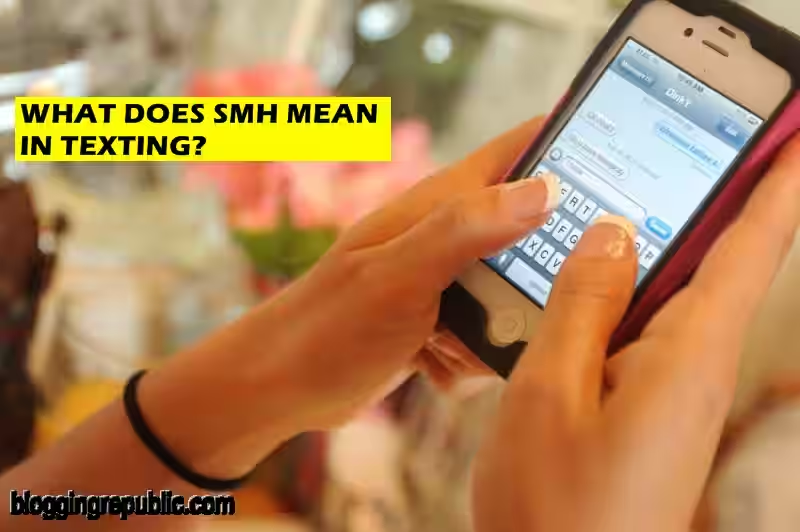
SMH stands for “shaking my head.” That’s the short answer. But how you use it, where it came from, and why it stuck around long enough to make it into Merriam-Webster all have a more interesting story behind them.
The basic meaning of SMH
When someone types SMH, they’re expressing the digital equivalent of watching something happen and slowly shaking their head at it. It signals disbelief, disappointment, mild frustration, or exasperation, usually at something that didn’t need to happen but did anyway.
It’s not a loud reaction. SMH isn’t shouting. It’s more like the quiet, tired response you have when something is exactly as predictable and disappointing as you expected. That emotional nuance is part of why it caught on. It fills a space that LOL, OMG, and other common abbreviations don’t quite cover.
Where it came from
SMH has been floating around the internet communication longer than most people realize. One of the earliest documented uses appeared in a Usenet group post from July 1994, where it was listed alongside other emerging abbreviations in a slang glossary. That predates Twitter, Instagram, Facebook, and most of the platforms people associate with internet slang by over a decade.
It didn’t reach mainstream usage until around 2010, when platforms like Twitter and Tumblr gave it the audience it needed to spread. Once it hit those platforms, it moved fast. By 2012, it was common enough in everyday digital communication that most regular internet users had seen it or used it.
How people actually use it
SMH appears across text messages, tweets, comment sections, and social media captions. The tone it carries depends entirely on context, but it almost always signals a negative reaction of some kind.
Some common situations where SMH shows up:
- Reacting to news that feels stupid or avoidable: “They cancelled the show after one season. SMH.”
- Responding to someone making an obviously bad decision: “He forgot his wallet again. SMH.”
- Expressing quiet frustration with a situation: “Waited 45 minutes and they said the order wasn’t placed. SMH.”
- Reacting to something mildly absurd without wanting to write a full response
It works in both lowercase and uppercase. Lowercase (smh) tends to feel more casual and tired. Uppercase (SMH) reads with slightly more emphasis, closer to active frustration than weary resignation. Neither is technically correct; it’s a tone call.
SMH versus SMDH and SMFH
When “shaking my head” doesn’t quite capture how strongly someone feels, stronger variations exist:
- SMDH (Shaking My Damn Head): One level up from standard SMH. Used when the situation is bad enough to warrant extra emphasis, but the person isn’t at peak frustration.
- SMFH (Shaking My F***ing Head): Reserved for genuine exasperation. This version signals that the person has run out of measured reactions and is fully done with whatever they’re responding to.
These follow the same pattern as a lot of internet slang, where the base term gets intensified by adding a word in the middle for scale.
The “SMH my head” problem
If you’ve spent time online, you’ve almost certainly seen someone write “SMH my head,” which technically translates to “shaking my head my head.” It’s a redundant phrase, and it became its own minor internet joke.
It falls into the same category as ATM machine or PIN number, where the last letter in the abbreviation gets repeated as a word. People use it anyway, either because they don’t realize the redundancy or because they do and find it funny. Either way, it doesn’t affect how the meaning comes through.
Other things SMH has been used to mean
While “shaking my head” is the dominant and widely accepted meaning, the abbreviation has been used for a few other phrases in different online communities:
- Scratching my head: Used to indicate confusion rather than disapproval
- So much hate: To describe negativity in a comment section or reaction
- So much hype: Occasionally used positively to express excitement, though this usage is rare
These alternate meanings are context-dependent and far less common. If you see SMH in a comment thread or text message and there’s no other context, “shaking my head” is almost always what the person means.
When to use it and when to skip it
SMH works best in casual, informal settings. Group chats, social media, comment sections, and texts between friends are all appropriate contexts. It reads naturally there.
It doesn’t belong in professional communication. An email to a client or a message to a manager that includes SMH will land badly, regardless of how valid the frustration behind it is. The same applies to any formal written context where abbreviations in general undermine tone.
The facepalm emoji (🤦) and the eye-roll emoji (🙄) serve as visual equivalents when you want the same energy without the abbreviation. They’re interchangeable in most casual digital conversations and carry the same resigned, mildly exasperated tone that makes SMH so widely understood.

- Why Online Betting Feels More Integrated Than Ever? - March 11, 2026
- Rebbie Jackson: The Life and Legacy of a Musical Icon - March 9, 2026
- What is Dollar General Pay Stub and How Does it Benefit? - March 5, 2026