If you’ve ever filled out a delivery form, registered for a service, or had a package go to the wrong address, you already know how much a ZIP code matters in practice. People ask what is my zip code more often than you’d think, and the answer isn’t always obvious, especially if you’ve recently moved or are filling out a form for an unfamiliar address. But most people don’t know what the numbers actually mean or where the system came from.
What ZIP actually stands for
ZIP is an acronym for Zone Improvement Plan. The name was intentional. The USPS chose it to suggest that mail moves faster when the code is included, zipping along through sorting facilities without unnecessary delays. It’s not just branding. The system genuinely changed how quickly mail could be processed across the country.
Before ZIP codes, mail sorting depended heavily on postal clerks memorizing delivery routes. With experienced workers being drafted into the military during World War II, the Post Office introduced a two-digit zone system for 124 large cities in 1943 just to keep operations running. That was the foundation. The full five-digit system launched nationwide on July 1, 1963, and became mandatory for second and third-class mail by 1967.
How to read the five digits
The five digits in a ZIP code aren’t random. Each position carries a specific geographic meaning:
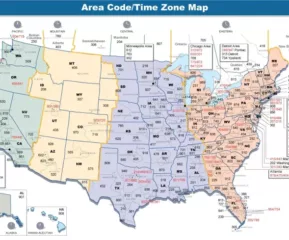
- First digit: Broad national region. “0” starts in the Northeast and increases westward, with “9” covering the West Coast and Pacific states
- Second and third digits: A more specific regional area, typically tied to a major city or distribution hub
- Fourth and fifth digits: The specific post office or delivery zone within that region
So a ZIP code is essentially a set of nested geographic coordinates, moving from national to local in five steps.
In 1983, the USPS introduced ZIP+4, adding four digits after a hyphen to identify a specific street segment or building. In 1991, two more digits were added internally so carriers could sort mail directly to individual residences and businesses. When you see a nine-digit code on a piece of mail, that’s what it represents.
How to find your ZIP code right now
Anyone asking what is my zip code has several fast, reliable options depending on what’s available:
USPS ZIP Code Lookup tool
Go directly to usps.com and use the ZIP Code Lookup page. Enter your street address, city, and state. The tool returns your ZIP+4 code and formats your address in the standard USPS style. This is the most authoritative source because it comes from the postal service itself.
Google Maps
Open Google Maps and type in your address. The full address shown in the result, including ZIP code, appears in the location details. You can also drop a pin on a specific location if you need the ZIP code for a place you don’t have a street address for.
GPS-based lookup tools
Sites like findmyzipcode.org and woosmap.com answer what is my zip code automatically using your device’s GPS coordinates. These tools work by converting GPS coordinates to a physical address through reverse geocoding, then matching it to the correct zone. If GPS isn’t available, they fall back on IP-based location, which is less precise but usually accurate to the city level.
Check existing mail or documents
Any letter or package delivered to your address will have your ZIP code printed on it. Your driver’s license, utility bills, and bank statements all carry it. If you’re looking for a permanent record, those are reliable references that don’t require any lookup.
When ZIP codes matter beyond mail
ZIP codes are used far beyond the postal system. The US 911 emergency system uses them as a fundamental routing component. Health insurance companies use them to set premium rates. Banks use them for fraud detection when a card is used at a location that doesn’t match the cardholder’s ZIP. Retailers use ZIP code data to determine where to open stores, target advertising, and analyze purchasing patterns.
When you enter a ZIP code at a gas pump or online checkout, you’re confirming your billing address to verify the card is being used by its actual owner. That one five-digit number is doing real authentication work in the background.
One thing people consistently get wrong
A city can have multiple ZIP codes, and a single ZIP code doesn’t always correspond to just one city. Large cities like New York or Los Angeles have dozens of codes covering different neighborhoods. Rural areas sometimes share a ZIP code across several small towns served by the same post office.
This is exactly why people searching for what is my zip code should use the USPS lookup tool rather than guessing based on the city name alone. Entering a city name when a form asks for a ZIP code will either produce an error or pull the wrong zone. When accuracy matters, the address-level lookup is the only method that returns a confirmed, deliverable result.

- 10 Best Free VPN Services in 2026 - March 23, 2026
- What is NIST CSF? Complete Guide to CSF 2.0 - March 22, 2026
- 10 Best Song Finder Apps Online [2026] - March 22, 2026