
Cinco de Mayo is the annual commemoration of Mexico’s unlikely military victory over French forces at the Battle of Puebla on May 5, 1862. It is not Mexican Independence Day, which falls on September 16 and dates back to 1810.
The Battle Behind the Date
In 1861, Benito Juárez won the Mexican presidency after a bitter civil war, leaving the country deep in debt to France, Britain, and Spain. Napoleon III of France saw the opportunity and sent troops into Mexico in early 1862, first taking the port city of Veracruz, then pushing west toward Puebla, with the goal of installing Archduke Maximilian of Austria as a puppet ruler.
By the morning of May 5, a Mexican force of roughly 2,000 men under General Ignacio Zaragoza faced approximately 6,000 French troops outside Puebla, a fortified town in east-central Mexico. The French army was considered one of the most powerful military forces in the world at that point. The Mexicans, a mix of mestizo and Zapotec fighters with far less equipment, repelled multiple assaults before the French withdrew that evening. Around 1,000 French troops were killed. Zaragoza sent word to President Juárez: the French had been beaten.
What It Actually Means for Mexico
President Juárez declared May 5 a national holiday days after the battle, calling it Battle of Puebla Day. The city of Puebla was later renamed Puebla de Zaragoza in the general’s honor, and the battlefield is maintained as a public park with a museum.
The French were not fully driven out of Mexico until five years later in 1867, so the Battle of Puebla did not end the conflict. What it did was prove that a smaller, outgunned Mexican army could hold against a European imperial force, making it a lasting symbol of resistance to foreign occupation. That symbolic weight is why the date stuck.
Inside Mexico today, Cinco de Mayo is observed mainly in the state of Puebla, where it originated. It was never a federal holiday, and most of the country does not treat it as a major celebration.
How It Became a Bigger Deal in the United States
The more surprising part of Cinco de Mayo’s history is that its growth into a widely celebrated day came from the United States, not Mexico. When news of the Battle of Puebla reached California in 1862, Latino communities, many of them Mexican miners and soldiers who had become U.S. citizens under the Treaty of Guadalupe Hidalgo in 1848, took to the streets. They paraded carrying both U.S. and Mexican flags together.
This was not just cultural pride. The French defeat at Puebla had direct consequences for the American Civil War. Napoleon III had been looking for a foothold in the Americas while the U.S. government was tied up with the Confederate conflict. A French-controlled Mexico would have been dangerous for the Union cause. So for Latinos in California and Nevada, the Mexican army’s win felt like part of the same fight for freedom and democratic government they were already engaged in.
Formal celebrations in California began as early as 1863. The holiday gained wider traction during the Chicano Movement of the 1960s and 1970s, when Mexican American activists used it as a platform for civil rights organizing, particularly on college campuses in cities like Houston, Chicago, and Los Angeles.
How It Is Celebrated Now
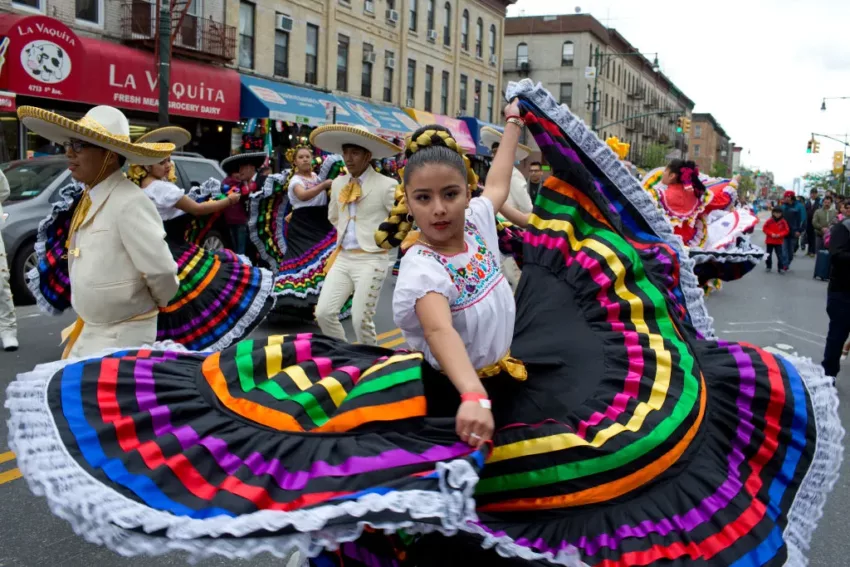
In the United States, Cinco de Mayo has become a large-scale cultural event, with parades, music, food festivals, and community gatherings across cities with significant Mexican American populations. In Puebla, celebrations are more historically focused, with military reenactments and civic ceremonies at the original battlefield site.
The holiday has also become heavily commercialized in the U.S., particularly by the food and beverage industry, which is where the association with tacos and margaritas comes from. That commercial layer sits on top of a history that is genuinely substantive.
The Misconception Worth Knowing
The single most common error people make about Cinco de Mayo is treating it as Mexican Independence Day. The two are completely separate events separated by 52 years and entirely different historical contexts. Mexican Independence Day on September 16 marks the 1810 start of Mexico’s fight against Spanish colonial rule. Cinco de Mayo marks a single battle in 1862 against French imperial forces.
If you are going to observe the day in any meaningful way, that distinction is the place to start. The battle was real, the stakes were high, and the outcome mattered beyond Mexico’s borders.

- Cloud Native Security Best Practices - April 24, 2026
- Best DevOps Certifications 2026 - April 16, 2026
- Top 10 DevOps Development Companies in New York - April 15, 2026