
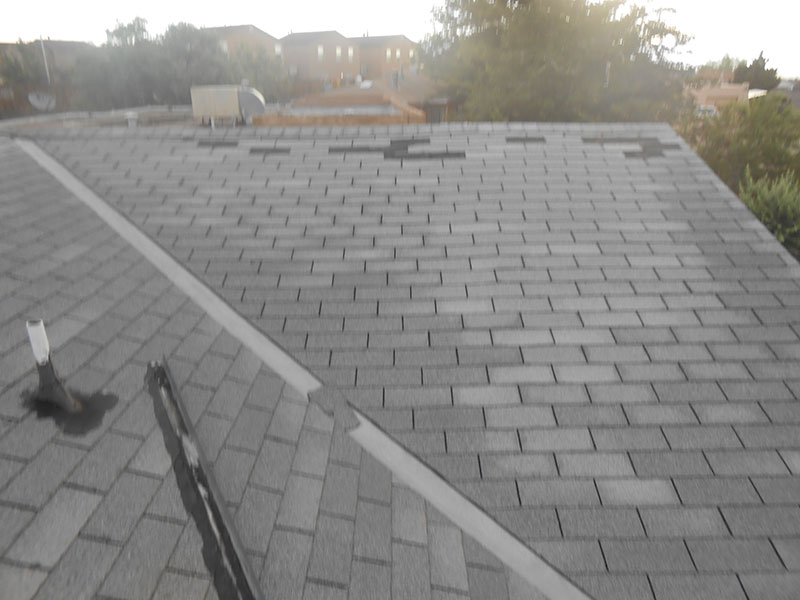
Santa Fe gets hail. More than most residents expect. Doppler radar has detected hail at or near Santa Fe on 44 recorded occasions, with 5 of those occurring in just the past year alone. Counties in central New Mexico, including Santa Fe County, see damaging hail at least twice each year, and hail the size of golf balls has been reported in the area. If you own a home or commercial property here, your roof has almost certainly taken hits you haven’t fully inspected.
Why does Santa Fe’s weather pattern create repeated hail risk?
Santa Fe sits at roughly 7,000 feet in elevation. The high desert climate means afternoon thunderstorms build fast during monsoon season, typically July through September. These storms don’t need to travel far or build over hours the way they do in lower-elevation regions. They develop quickly, drop heavy hail, and move on within minutes.
Severe thunderstorm warnings in Santa Fe have included hail as large as two inches in diameter alongside 60 mph wind gusts. At that size and speed, hail doesn’t just ding a roof. It bruises asphalt shingles, cracks tiles, bends metal flashing, and forces granule loss that accelerates aging across the entire surface.
What does hail actually do to different roof materials?
The damage varies depending on what your roof is made of, but no material is immune.
Asphalt shingles are the most common roofing material in the area and the most visibly affected by hail. Impact points show up as dark circular bruises where the granule surface has been knocked loose. Those spots expose the underlying asphalt mat to UV radiation and moisture, which shortens the lifespan of the shingle from the inside out. The problem is that granule loss isn’t always visible from the ground.
Flat or low-slope roofs, common on Santa Fe’s adobe-style homes,s take hail differently. The membrane or built-up roofing surface can develop small punctures or fractures that don’t leak immediately but allow water infiltration over the following rainy season. These are easy to miss during a casual visual check.
Metal roofing holds up better structurally but shows cosmetic denting from larger hailstones. While dents don’t always compromise function, they can damage protective coatings that prevent rust, particularly on older installations.
Tile roofing, popular in Santa Fe given the regional architectural style, is brittle under impact. Quarter-size hail and larger can chip, crack, or completely break individual tiles. A cracked tile may not cause an immediate leak, but the underlayment beneath it is now exposed and taking wear with every subsequent storm.
The damage you won’t see from the group.nd
Walking around the outside of your house after a storm and not seeing obvious damage does not mean the roof is fine. Granule loss on asphalt shingles, hairline cracks in tile, and compromised flashing around chimneys and vents are all invisible without getting on the roof or using binoculars to inspect at close range.
Gutters are a useful indicator. After a significant hailstorm, check the gutters and downspouts for an unusual accumulation of granules. If the gutters are filling up with the gritty material that coats asphalt shingles, the roof surface is degrading, whether or not you can see bruising from below.
How storm timing compounds the problem?
Santa Fe’s monsoon season runs almost parallel to when roofs are already under thermal stress. Summer temperatures push roofing materials to expand, making them more vulnerable to impact fractures than they would be in cooler months. A hailstorm hitting a heat-stressed asphalt shingle in August does more damage than the same storm in April.
When hail arrives with the 60 mph wind gusts that commonly accompany severe thunderstorms here, it strikes at an angle rather than straight down. This creates different stress points on shingles and tiles, often hitting the edges and seams where materials are already most vulnerable to water intrusion.
What to do after a hailstorm?
Don’t wait for a visible leak before calling a roofing contractor. By the time water gets through, the damage is already significant, and the repair costs have gone up.
After any storm where hail is reported in your area:
- Check gutters for granule accumulation
- Look for dented or damaged flashing around vents, chimneys, and skylights
- Inspect visible shingles with binoculars for dark bruise marks or missing sections
- Schedule a professional roof inspection, especially beforethe monsoon season ends
Santa Fe’s hail history shows this isn’t a question of if your roof gets hit. It’s a question of how much damage has built up and whether you catch it before it becomes a leak, a mold problem, or a full replacement.

- How to Build a Consistent Brand Voice? - March 18, 2026
- How Do Hailstorms Affect Your Roof in Santa Fe, New Mexico? - February 21, 2026
- 10 Best Child Tracking Apps: The Complete Parent’s Guide - July 10, 2025